Info
5 min
Why New House Roofs Leak — Roof Leak Repair Guide
New house but the roof is already leaking? Here are 6 common causes and what you should do.
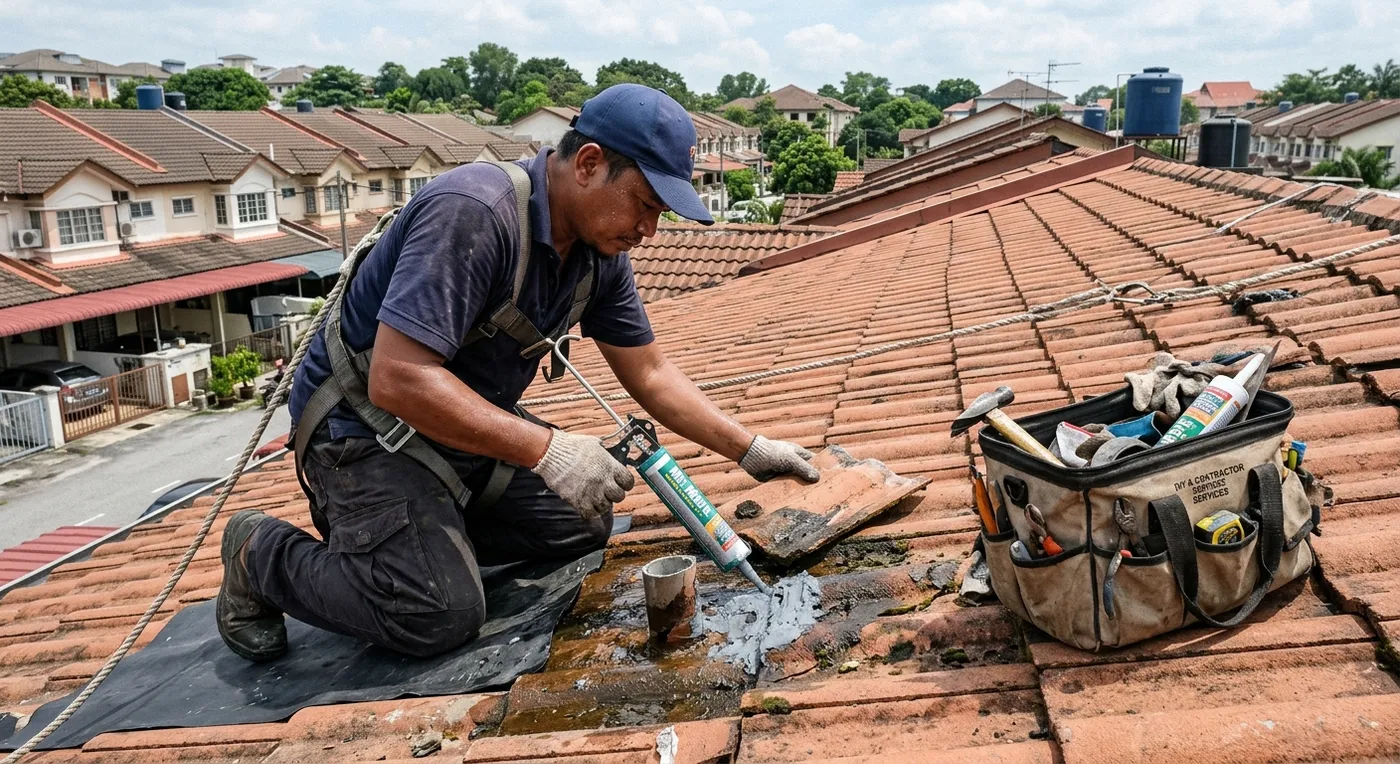
New House But the Roof Is Already Leaking?
This is one of the most frustrating situations for any homeowner. You have just collected your keys, just moved in, and suddenly there are water stains on the bedroom ceiling. Many people assume a new house roof leak is impossible — the house is new, everything should be perfect. In reality, a leaking roof in a new house is more common than you think.
The good news: in most cases, you have the right to claim free repairs from the developer. This article explains the 6 main causes, your rights under the DLP, the correct steps to take, and estimated costs if your protection period has already expired.
6 Main Causes of New House Roof Leaks
1. Construction Defects
Improper roof installation during construction is the most common cause. This counts as a developer defect — a flaw the developer is responsible for fixing. Examples we frequently encounter:
Tiles not laid correctly — roof tiles with insufficient overlap let water in every time it rains heavily
Flashing not sealed — roof flashing at wall joints and ridges that is not properly sealed becomes the most common water entry path
Insufficient gradient — a slope that is too shallow causes water to pool on the roof and eventually seep through
2. Low-Quality Materials
Some developers use cheap materials to save costs. Thin underlayment, roof screws without quality rubber washers, and low-grade roof silicone all deteriorate faster than standard materials. The effects may not be visible at key handover, but start to appear after a few months of alternating intense heat and heavy rain.
3. Structural Settlement
New houses experience "settlement" — the ground and structure compact slightly during the first years. This small movement can cause hairline cracks at roof joints, especially around the flashing and roof ridge. Even fine cracks are enough for rainwater to seep into the ceiling.
4. No Water Test Conducted
Careless contractors may skip the water test before key handover. Without this test, small leaks go undetected early — and it is the house buyer who eventually "discovers" them during the first rainy season.
5. Severe Weather After Completion
Strong storms after the house is completed can damage installations that have not fully settled. High winds can shift roof tiles or loosen newly installed roof screws, and the damage is only noticed when heavy rain arrives.
6. Subcontractor Work
Many developers use cheap subcontractors who may be less skilled. Roofing quality depends heavily on workmanship — a roof installation that looks neat from afar can be very different in quality when inspected up close.
Early Warning Signs to Watch For
Do not wait until water drips onto the floor. Check for these early signs from your first month after moving in:
Yellowish marks or water stains on the ceiling
Ceiling or wall paint bubbling and peeling
A damp smell in upstairs rooms or the attic space
Water droplets where the ceiling meets the wall during heavy rain
Sunlight showing through roof gaps when viewed from the attic
The earlier a leak is detected, the easier your claim against the developer — and the smaller the follow-on damage to your ceiling, wiring and furniture.
Your Rights as a Buyer
During the DLP (Defect Liability Period)
**24 months** from the date of key handover
The developer MUST fix defects for free
Report in writing to the developer
Take photos as evidence
After the DLP
You need to repair at your own cost
You can claim through the Homebuyer Claims Tribunal (for serious defects)
Step by Step: What Should You Do?
Documentation — Take photos and videos of every leak mark, and note the date and weather conditions. Photographic evidence is essential for any claim.
Report to the developer — Send a written report by email or official letter. Keep a copy of the report and proof of delivery.
Follow up — If the developer is slow to act, send written reminders. Record every communication so there is a clear paper trail.
Tribunal — If it is still unresolved, file a complaint with the Homebuyer Claims Tribunal. The process is consumer-friendly and does not necessarily require a lawyer.
Hire a contractor — If the DLP has expired, hire an experienced roofing contractor to repair the leaking roof properly and durably.
Estimated Repair Costs After the DLP
If your DLP has expired and you need to fix the leaking roof yourself, here are typical estimates in Malaysia:
Type of Work
Estimated Cost
Unit
Notes
|---|---|---|---|
Minor leak patching
From RM150
Per job
Minimum repair charge
Broken tile repair
RM200 - RM800
Per job
Depends on number of tiles involved
Zinc roof replacement
RM15 - RM25
Per sq ft
Includes old roof removal
Roof waterproofing
RM12 - RM18
Per sq ft
Suitable for flat roofs and joints
For terrace houses, a full roof replacement typically costs around RM3,000 to RM8,000 depending on house size and choice of materials.
Care Tips for a New House Roof
Even though the house is still new, early maintenance extends your roof's lifespan:
Check the attic space every few months, especially after heavy rain
Make sure gutters and roof drainage channels are not clogged with leaves or construction dust
Do not leave construction debris on the roof — heavy fragments can crack tiles
Avoid walking on the roof yourself; tiles crack easily when stepped on in the wrong spot
Get a professional roof inspection before the DLP ends so every defect can still be claimed from the developer
When Should You Call a Roofing Contractor?
If the leak involves the structure, covers a wide area, or keeps returning after the developer's repairs, call a professional roofing contractor. Working on a roof is high-risk, and a botched repair only masks the problem temporarily before it comes back worse.
AtapPro operates in 16 states across Malaysia with 15+ years of experience in roof leak repair. Our team responds within 30 minutes, and every major repair comes with a 5-year warranty — 1 year for minor works, and up to 10 years for waterproofing.
Conclusion
A leaking roof on a new house is NOT something normal that you have to accept. It is a defect the developer must fix — and you have 24 months to claim it for free. Document every leak, report in writing, and keep following up. If the DLP has expired, contact AtapPro for professional repair.
Need Help From a Roofing Expert?
AtapPro is ready to help. WhatsApp us for a FREE quotation — we respond within 30 minutes.
WhatsApp AtapPro NowFAQ — Why New House Roofs Leak — Roof Leak Repair Guide
How long is the DLP for a new house roof in Malaysia?
The Defect Liability Period (DLP) is 24 months from the date of key handover. During this period, the developer must fix roof defects for free. Make sure your report is made in writing and supported with photos as evidence.
Can I hire my own contractor while the DLP is still active?
Yes, but the cost is borne by you, and outside repairs may complicate your claim against the developer. The best approach is to report to the developer in writing first. A professional roofing contractor can help prepare an inspection report as supporting evidence for your claim.
How much does it cost to fix a new house roof after the DLP expires?
It depends on the cause and scope of the damage. Minor patching starts from RM150, broken tile repair is around RM200 to RM800, and roof waterproofing is around RM12 to RM18 per square foot. Leaks detected early are almost always cheaper to fix.
Does a leaking roof count as a developer defect?
Yes. Improperly installed tiles, unsealed flashing and insufficient gradient all count as developer defects. As long as you are within the 24-month DLP, the developer is responsible for fixing them at no cost to you.