Guide
8 min
7 Ways to Fix a Leaking Roof — Complete Guide 2026
A leaking roof can become a major problem if left unattended. Learn 7 effective ways to fix your leaking roof.
Why Do Roofs Leak?
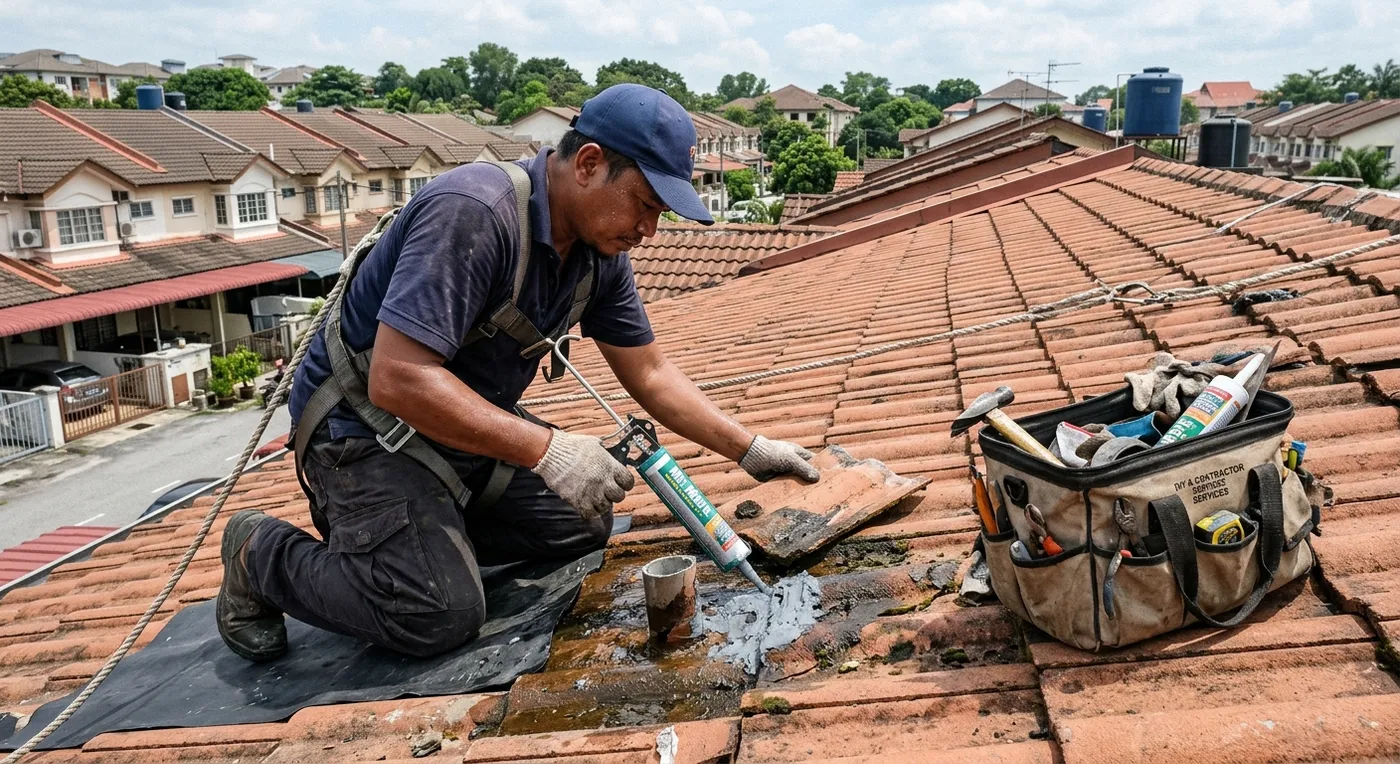
A leaking roof is the most common problem faced by homeowners in Malaysia. Hot weather and heavy rain throughout the year cause roofs to deteriorate quickly. Roofing materials expand in the heat and contract when rain falls — this cycle weakens roof joints little by little until water starts seeping in.
Beyond weather, common causes include poor original installation, rusted roof screws, lifted flashing, and years of neglected maintenance. The good news: most cases can be resolved without replacing the entire roof. Here are 7 effective ways to address this problem.
Early Warning Signs to Watch For
Before getting into how to fix a leaking roof, identify the early warning signs first. The faster you act, the cheaper the repair:
Water stains on the ceiling — yellow or brown patches that grow after heavy rain
Bubbling or peeling paint — water has seeped into the ceiling layer
Damp smell in the house — especially in the space under the roof
Mold on upper walls — a sign of water trapped for a long time
Dripping water when it rains — serious stage, do not delay any longer
1. Identify the Source of the Leak
The first step is to find where the leak is occurring. Check your ceiling for water stains, then go up to the roof to find the source. One important point: the spot where water drips from the ceiling is usually NOT where the water enters. Water can travel along rafters or the roof frame for several meters before dropping onto the ceiling. So inspect areas higher up than the water stain.
Leaks typically occur at:
Roof joints — where two zinc sheets or tiles meet
Flashing — areas around chimneys or walls
Broken or cracked tiles — common in older houses
Rusted screws — on zinc or metal deck roofs
Roof ridge — cracked ridge cement lets water seep through
The easiest way: during rain, go up to the attic space with a torchlight and watch where the water flows from. Mark the spot so it is easy to find once the weather is dry.
2. Use Roof Sealant
For minor leaks, roof sealant can be a temporary solution. Choose UV and water-resistant sealant like silicone or polyurethane. Ensure the surface is clean and dry before application — sealant applied over a wet or dusty surface will peel off within months.
Roof silicone works best for sealing screw holes, hairline cracks on zinc, and small gaps at joints. Remember: this is a temporary fix. If the leak comes back, the real cause has not been resolved.
**Estimated cost:** RM20 - RM50 per tube
3. Replace Broken Tiles
If tiles are broken or cracked, replace them with new ones. Ensure new tiles match the size and type of existing ones. For older houses, you may need to source tiles from specialist suppliers.
Be careful when walking on a tiled roof — step on the lower part of each tile where the truss supports it, not in the middle of the piece. One wrong step and other tiles crack too, making the problem bigger. If you are not confident, leave this job to a roofing contractor.
**Estimated cost:** RM5 - RM15 per tile (material only). Tile repair work by a contractor typically runs around RM200 - RM800 depending on scope.
4. Repair or Replace Flashing
Damaged flashing is a leading cause of leaks. Flashing is installed where the roof meets walls, chimneys, or skylights. Over time, roof flashing can lift, rust, or its sealant dries out and cracks. Replace old flashing and ensure proper sealing.
**Estimated cost:** RM200 - RM500
5. Apply Waterproofing
For flat concrete roofs or persistently leaking roofs, waterproofing is the best solution. Types include:
Membrane waterproofing — most durable (5-10 years)
Liquid waterproofing — easy to apply, suitable for small DIY
Cementitious waterproofing — suitable for concrete roofs
Roof waterproofing done properly by a professional team usually comes with a warranty of up to 10 years — far better value than patching with sealant again every rainy season.
**Estimated cost:** RM12 - RM20 per square foot
6. Replace Rusted Zinc Roofing
If zinc roofing is severely rusted with many holes, it's better to replace entirely. Patching a leaking roof that is full of holes only wastes money — new holes will appear elsewhere. Choose high-quality new zinc like BlueScope or CSC Steel that lasts longer.
**Estimated cost:** RM15 - RM25 per square foot (including installation). For a full terrace house roof replacement, budget around RM3,000 - RM8,000.
7. Hire a Professional Contractor
For serious leaks or when you're unsure of the cause, hire a professional roofing contractor. Experienced contractors can quickly identify problems and provide the right solutions.
What to check before appointing a contractor:
Proven experience — teams like AtapPro have 15+ years in roof leak repair
Written warranty — repair work should come with a warranty; AtapPro provides a 5-year warranty for major work and 1 year for minor work
Area coverage — make sure they serve your area; AtapPro operates across 16 states throughout Malaysia
Fast response — for emergencies, a 30-minute response can save your ceiling and furniture
**Tip:** Get at least 3 quotations before choosing a contractor. Ensure there's a written workmanship warranty.
Estimated Costs by Type of Work
Type of work
Estimated cost
Scale
Durability
|---|---|---|---|
Sealant / roof silicone
RM20 - RM50 per tube
Small (DIY)
Temporary
Minor contractor repair
From RM150
Small
1-year warranty
Broken tile repair
RM200 - RM800
Small - medium
Depends on scope
Flashing replacement
RM200 - RM500
Medium
Lasting if installed properly
Waterproofing
RM12 - RM20 per sq ft
Medium - large
Warranty up to 10 years
Zinc roof replacement
RM15 - RM25 per sq ft
Large
Long term
Maintenance Tips to Make Your Roof Last
Prevention is cheaper than repair. Practice these steps:
Inspect the roof twice a year — especially before the monsoon season begins
Clean the roof gutter — leaves and debris clogging the gutter make water overflow under the roof
Replace rusted roof screws — before the rust spreads to the zinc sheets
Trim nearby tree branches — branches rubbing against the roof damage its surface
Check after storms — strong winds can shift tiles and flashing without you noticing
When to Call an Expert?
Recurring leaks despite repairs
Swollen or moldy ceiling
Roof is over 15 years old
Extensive damage after storms
Conclusion
Don't ignore a leaking roof — the longer you wait, the more expensive the repair. Start by identifying the cause, handle small repairs yourself if you can, and call a roofing contractor for any work involving structure or heights. A well-maintained roof is not just leak-free — it protects your home's value for years to come.
Need Help From a Roofing Expert?
AtapPro is ready to help. WhatsApp us for a FREE quotation — we respond within 30 minutes.
WhatsApp AtapPro NowFAQ — 7 Ways to Fix a Leaking Roof — Complete Guide 2026
Can I fix a leaking roof myself without a contractor?
Yes, for small cases like sealing screw holes with roof silicone or replacing a single broken tile. But working on a roof is high-risk — surfaces are slippery and tiles crack easily if you step wrongly. For recurring leaks, flashing problems, or a high roof, it is safer to call a professional roofing contractor.
What is the minimum cost to fix a leaking roof?
Minor repair work by a contractor starts from RM150 — for example patching a small leak or replacing a few rusted screws. If you want to do it yourself, roof sealant costs around RM20 to RM50 per tube. The actual cost depends on the cause and extent of damage, so an on-site inspection is important before getting an exact figure.
Why is my roof still leaking after being repaired?
Usually because the real source was never found — water can travel along the roof frame far from where it drips onto the ceiling, so the patch ends up in the wrong place. Sealant applied over a dirty or wet surface also peels off quickly. That is why roof leak repair should start with a thorough inspection, not straight to patching.
When is the best time to repair a leaking roof?
The dry season or hot weather is the most suitable time because the roof surface is dry and sealant and waterproofing bond properly. Avoid waiting until the monsoon season — contractor demand is high and the damage worsens with every rainfall. If you discover a leak during the rainy season, apply a temporary patch first and schedule the permanent repair as soon as the weather allows.